Fit for Life…Everyday Exercise 2 of 10

PUSH-UPS! This is the second exercise of ten in the functional fitness series. Remember a functional exercise will engage your body in multiple planes of movement (front/back, side/side, rotational, etc.) or engage multiple joints at one time during the course of the given exercise.

During the push-up exercise several muscle groups in the chest, arms, forearms, shoulders, triceps, back, and neck work simultaneously. And because push-ups are performed in a prone, front leaning position, they also help develop core and shoulder stabilizing strength which aids in good posture.

push_up_progression

The above graphic illustrates the body position progressions for the push up exercise. For the standing push up, moving the legs further away from the wall will make the push up more difficult. After the wall push up, the next transition would be to a table or counter height push-up. When performing the last two push ups variations (knee and classic), make sure the wrists are directly below the shoulder joints.

How To Progress: You should be able to complete 2-3 sets of 8 to 12 repetitions of each push-up variation before progressing onward to the next level of difficulty. Instructions for performing a push-up in the classic position follow below. Use those guidelines to adjust and modify your hand and feet positions for all push-up progressions (wall, counter, knees, toes).

For the classic push-up, start on your hands and knees, with hands a little wider than shoulder-width apart. You may angle your hands to accommodate a position that feels best for your wrists. Knees can be spread from hip to shoulder-width apart; find a position that feels comfortable for you, engage your core and butt muscles and raise yourself up to a high-plank position. The closer your feet are together, the more challenging the exercise will be.

Your body should form a straight line from your shoulders to your ankles; no sagging or piking at the hip. You will use your core strength to maintain this body position throughout the downward and upward phase of the exercise. As you lower your body down towards the ground, make sure that you achieve at least a 90-degree angle at your elbows; lowering your chest to the ground will increase the intensity of the exercise. Pause for a moment in the downward position before pushing yourself back up into the starting position.

Once you master the basic push-up, you’ll be ready to add some variety to this exercise. Here’s a brief list of the different types of push-ups you can perform to further strengthen and challenge you:

  • Narrow (diamond) push-up
  • Single leg push-up
  • Spiderman push-up
  • Staggered push-up
  • Decline push-up
  • T push-up
  • Push-up to Forearm Plank to push-up

If you would like explanations or pictures for the push-up variations, just attach your comments or questions to this post. Functional fitness exercise number 3 of 10 will be posted mid-week. In the meantime…drop and give me 10!


Fit for Life…Everyday Exercise 1 of 10

SQUATS! This move is at the top of my list because it accomplishes so much for us by targeting the major (largest) muscles of the lower body together with multiple joints (hips, knees, ankles). The core (abdominals, spine and obliques) is also activated and as such this exercise helps enhance balance.

How To: The basic squat begins by standing tall with your feet hip-width distance apart, shoulders relaxed and head held high. Look straight ahead to keep your neck in line with the rest of your spine. Hold your arms straight out in front of you (this is best if you need extra balance) or place your hands on your hips. When you’re ready, keep your core tight and maintain a neutral spine as you slowly squat down (as if you were about to sit in a chair behind you). Be sure to keep your heels firmly planted on the ground and to keep your torso upright. Pause for a beat before slowly returning to the starting position. Repeat for 8 to 12 repetitions.

body-weight-squat

Add 1 or 2 repetitions to your daily squat routine; when you can complete 3 sets of  squats (12 repetitions each set), then you are ready to add some variation to your routine. I’ll list a few options below.

  • Prisoner Squat (with hands held behind head)
  • Plié squat
  • Curtsy squat
  • Squat jump
  • Squat jack
  • Squat with side kick
  • Split squat (also known as a lunge)

If you would like explanations or pictures for the squat variations, just attach your comments or questions to this post. Functional fitness exercise number 2 of 10 will be posted soon…in the meantime, keeping squatting!


Fit for Life…A Functional Exercise Plan (A Series of 10)

In recent years, ‘functional fitness’ has become a buzz word in the fitness industry to sell and package a wide array of exercise programs to potential training clients. Whether sports specific or generalized training is sold, functional fitness terminology is used so frequently that it often means different things to different populations.

For purposes of my Fit for Life Series, I define functional fitness (exercise) as a strength training plan which involves performing work against resistance (preferably body weight resistance) in such a manner that the improvements in strength directly enhance the performance of movements found in those activities of daily living. Yet, before I continue with a discussion of functional fitness, I would first like to define the dual components of fitness.

The health related  components of fitness measure an individual’s cardiorespiratory endurance, muscular strength and endurance, flexibility and body composition (% fat vs. lean tissue). The skill related components of fitness rate an individual’s agility, coordination, balance, power, reaction time and speed.

Used in this context, a functional, Fit for Life, exercise plan would train your body for life, rather than for a specific sport or for a certain aesthetic appearance. This type of training is especially helpful for older adults because it addresses muscle imbalances and asymmetries, and it addresses improvements (strength, flexibility) for the ways we move  throughout our daily activities.

There are five basic movement patterns that we use in everyday life:

1. Bend-and-lift movements. In the gym we call it squatting, in everyday life it’s getting in and out of a chair or squatting down to lift a bag of groceries from the floor. Bend and lift movements require strength in the glutes, quads, and hamstrings, but also plenty of stability in the core, and flexibility in the knees and ankles.

2. Single-leg movements. You’ll often train single leg movements in the gym with a variety of lunging movements. In real life, single-leg movements are called for when you walk, when you climb or descend stairs, or when you bend and reach forward on one leg to get something from the floor. Like the bend-and-lift movements, single-leg movements require combined strength, stability and flexibility with an added element of balance over a changing center of gravity.

3. Pushing movements. Pushing movements typically involve your upper body pushing forward (opening a store door) pushing overhead (putting an object on a high shelf) or pushing to the side (lifting your torso from a side-lying position). In your workout you can train for pushing movements with pushups, overhead presses or side planks.

4. Pulling movements. Pulling movements in your activities of daily living might include pulling the car door shut, pulling the sheets down from the top shelf of the linen closet, or pulling your suitcase off the floor. In your workouts you’ll train for pulling movements by developing core stability, strength in your back and shoulders, stability in your shoulder blades and flexibility in your shoulders.

5. Rotational movements. Your thoracic spine rotates with every step you take and any time you swing a golf club or tennis racket. Any time you reach across your body or twist through the spine, you’re engaging in a rotational movement. This complex movement pattern requires a great deal of core stability and strength to support the spine during the rotational motion.

Over the next few weeks, I will post ten articles. Each article will fully describe and illustrate the activities I believe are the best exercises to perform each day to improve fitness and function for life.

My next blog entry will describe the basic squat exercise with options for various progressions as improvements in strength are realized. I look forward to sharing my thoughts and these training tips with you, my blog reader in the days ahead; I invite your comments and questions should you desire to engage in a conversation on this topic.


Hop To It!

As a personal trainer, I’m often reminding my clients of the importance and value of continued resistance training through their 6th, 7th and 8th decades. For those folks who run into these later decades, leg strength and power can be maintained and even increased with regular weight training and agility exercises. This fact has been examined and proven over and again in many controlled scientific studies with aging athletes.

It’s a running fact of life: Runners get slower as they get older. But a new report suggests that strengthening the ankles and calves could help aging runners stave off the slowdown. (Runner’s World)

I like to keep things simple for my clients because they have busy lives, and adding a heavy physical training schedule to their to-list is not an effective way for them to maintain their physical fitness. This is why I am a BIG fan of incorporating jump rope sessions into all my clients’ training programs.

For runner’s especially, jump rope provides an opportunity to improve one’s aerobic endurance, coordination, balance and lower leg strength. Jumping rope is the ultimate full body work out. In 10 minutes, a jump rope session can torch 100 calories, more or less. So pick up your jump rope and get started today. If it’s been awhile since you’ve jumped rope, you probably won’t be able to jump continuously for 10 minutes; but don’t let that deter you. If you’ll keep at it, you’ll be able to add another minute or two to your hops and skips in short order.

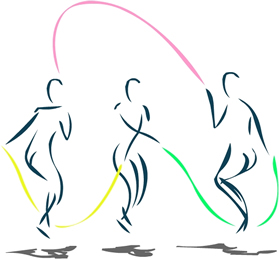
Consider the graphic below which illustrates the full body work out you gain while jumping rope. Without reserve, I can make this promise to you just like I do with my clients, if you’ll jump rope three or four times a week for 10 minutes at a time, I promise you that within 1 to 3 weeks, you’ll notice improved gains in your stamina, power, speed, and agility. So what are you waiting for? Hop to it and enjoy stronger lungs and legs!

jump_rope


Exploit Your Weakness…Then You Will Be Strong

This morning’s run was only two and a half miles, which is short by definition; but running any miles on already tired legs becomes a strength workout, for body and mind. I knew I would likely struggle to stay mentally positive given the condition of my legs, but the simmering early morning temperature beckoned me out of doors before the sun rose high and hot.

So today’s run would require a suitable mantra to keep my mind off my tired legs. I thereby chose words that would make me think I was something which I was not altogether actually feeling. Today’s mantra would be: “I am strong…I am fast”. And with every breath in I would think, I am strong; with every breath out, I am fast.

The power of a focused mind is an amazing thing! This morning’s run was everything I hoped (thought and breathed) it could be: refreshing, revitalizing, inspiring and FAST! But then, a funny thing happened as I walked the final steps up my driveway to the front door. As I was relishing my short run accomplishment, a thought came to mind: “It is good to exploit the weakness“. Really? Exploit the weakness? How can that be good?

Exploit: to utilize, especially for profit; turn to practical account; to advance or further.

As I allowed that idea to clank around inside my head, I was beginning to see the value of working with our weaknesses. Yes indeed, this is what strength training is all about after all, which is namely, to exploit our weaknesses so as to advance our strength and balance in body, mind and soul. Yes, that’s exactly right! To exploit or expose the ‘weak links’ in regards to our fitness and strength training is to recognize those areas in ourselves in which our natural abilities have fallen short.

Admitting your faults isn’t a weakness – it’s a strength. Having your weaknesses pointed out isn’t a slur on your character – it’s an opportunity to improve your life. James A. Owen

These areas of weakness then, really become our allies for growth, if we only accept them as such. If our focus on weakness is positive, then we can embrace the opportunity to build and improve (repair) our weak links. If our focus on weakness is negative, then we may not be able to address our brokenness and thereby we become self-defeated. This attitude transcends every area of our life. We are, after all, what we think we are…

I quit focusing on the handicap and began appreciating the gift. It was a case of Christ’s strength moving in on my weakness. Now I take limitations in stride, and with good cheer, these limitations that cut me down to size — abuse, accidents, opposition, bad breaks. I just let Christ take over! And so the weaker I get, the stronger I become.  2 Corinthians 12:9-10 (from THE MESSAGE)


Live and Move Like You Mean It

Have you ever noticed that people measure things that matter to them. It doesn’t matter whether we measure things in minutes, repetitions, days, inches, pounds, miles or years, you can be certain that if something is important to a person, they will measure it. It’s just that simple.

Now consider your health and fitness goals. Are you flagging in your resolve to regularly eat healthy and stay active? Then ask yourself, “How am I measuring my progress? What am I tracking or counting?” If you can’t answer those questions using phrases like: I will reach 26% body fat over the next 6 months; or I will eat soup and/or salad for dinner twice a week; or I will do pushups once a day until I can do 10 in a row; then you have most likely not given yourself something measured to work towards.

The trick is to realize that counting, measuring, and tracking is not about the result. It’s about the system, not the goal. Measure from a place of curiosity. Measure to discover, to find out, to understand. Measure from a place of self-awareness. Measure to get to know yourself better. Measure to see if you are showing up. Measure to see if you’re actually spending time on the things that matter to you. James Clear

The genre of your measuring isn’t important. What matters is that you have an idea of what you want to reach, something towards which you must count…something of which you must focus upon…something that no matter how you are feeling on any given day or moment, you know you will certainly work towards completing; remember, if you will just  show up and do the work required by your measured plan…day after day, your intentional behavior accumulates in progress; and progress will not disappoint, because it is forward movement towards your measured milestone.

Your success requires only your intention. Be specific about what you want to accomplish. Count on your success…every day…show up and live and act like you mean it! Then don’t be surprised when you arrive at your desired outcome, but rather celebrate your arrival, because your journey of successful accomplishment has just begun…


Rituals, Routines and Religion

My morning ritual is one that I especially look forward to: rise, eat banana, make coffee; sip coffee; read my devotions; be quiet…listen…wonder…listen…pray…jot down the ideas or inspirations that have been piqued during my morning quiet time. I will write about these things; I will think about these things as I prepare  for the new day. So now you know my morning ritual…for waking up and for making a connection with the Divine One.

Now I’m ready for my morning exercise routine; I’ll have some toast or half a bagel and get ready to go for my morning run. On Monday, Wednesday and Fridays I head out the door for a 3 to 8 mile run, depending on the schedule for the day. On Tuesdays and Thursdays I put on my Zumba fitness garb and lead an hour long group fitness class. Saturday or Sundays are reserved for long runs of 8 to 10 miles or a mountain bike ride with my husband. My exercise routine is so well entrenched in my body and on my calendar that I feel completely out of sync when I miss a morning run or class.

But that’s the value of having and using rituals and routines. They help us stay connected and in touch with those activities that are important for us to do every day. Do these things long enough and they become a part of you, of your subconscious.

However, rituals and routines do have their downsides. Rather than keeping us on track, they can become a source of  great boredom for us…in other words we can feel stuck in a rut by the very routine that once gave a us a firm sense of being or accomplishment. If I ever feel stuck or bored in my routines, then I know they have outlived their purpose. It’s time to recycle or reinvent a system that will continue to propel me in a positive, forward frame of mind and/or way of going.

We should not hold a ‘religious’ attachment to rituals and routines. Even though their very existence in our daily life provides a semblance of structure, this framework should not be allowed to solidify if it is no longer useful for its original purpose. If our rituals and routines fail to motivate us to engage in the desired behaviors or actions for which we initially employed them, then it’s likely that they have become a religion of tired belief rather than a reflex of purposeful action.

Are your rituals and routines working for you? If not, don’t be afraid to change things up for yourself. Your creativity, your fitness, your personal goals or spirituality can only improve when you reset your rituals and routines.


Puzzle It…For Brain Power

Returning to the simple games of our childhood is yet another way we can enhance brain power as we progress in age through the decades. Improved language skills can be realized by doing crossword puzzles. Likewise, spatial awareness is advanced when you put together a jigsaw puzzle. If you already engage in puzzle activities, you can improve your mental powers by undertaking more challenging puzzles.

Not a puzzle person? Remember there is brain strengthening power for you when you engage in novel activities. So perhaps an easy word search or Sudoku puzzle will whet your appetite for further puzzling. If you enjoy using a computer, you can find word search and crossword puzzle applications for your computer or smart phone too. Don’t wait for a rainy day to have puzzle fun. Schedule regular puzzle breaks into your daily routine; think of puzzling as exercise for your brain. So be creative and puzzle it today to strengthen your most important muscle…for brain power!


Strength Begets Strength

Similar to the way we gain unwanted pounds over months and years, we can accumulate strength over months and years when we engage in focused fitness activities. I train older adults in physical fitness using running, strength, and Zumba Gold group classes. It is always a delight to hear from these folks during and after their weeks of training that they are able to complete activities of daily living (lifting, shoveling, pulling weeds, walking, etc) with greater ease and no muscle strains or joint aches as a result of their improved physical fitness. They seem amazed that they are now able to do tasks that require a measure of strength and endurance which their younger selves could not perform only a few months or years ago. I assure them that their improvements will continue for as long as they maintain their fitness programs, yes, even into their 7th, 8th and 9th decades. How is this possible? Because it is an immutable law of nature. A body in motion, stays in motion. When once the habit to stay physically active is engrained onto the hard drive of our psyche, it is possible to delay, maybe even stall, the aging process with regular bouts of  moderately intense exercise. Many elders have gone before us and proved this true; and many more 70, 80 and 90+ year old athletes continue to complete in competitive athletic events and break records every time they show up. For myself, and I think it may be true for most adults who are not sporting competitors, the most alluring reason to stay strong and fit into our later decades is to become the best that we can be (in body, mind and spirit) when we cross our final finish line. Whether you are 50 or 70 or 90 years old, it is never too late to become more active than you were in your youth. If you have even the slightest inclination to get moving, then take that as your inspiration and move it! Walk, run, dance, hop, skip, jump…don’t wait another day…just move it. Strength begets (gives birth to) strength, not by thinking about being physically active, but by being physically active…every day.

It is my prayer that none of us will allow where we start to determine how we finish. T.D. Jakes

I have always had the initial faith that if God put something on my mind and in my heart, it could and should be done, but both elements must work together-mind to initiate it and the heart to propel it.
Sister Madonna Buder ~ 85 year old tri-athlete


Love-Hate Relationship with Exercise?

Do you find yourself ‘zoning out’ during weight training repetitions or while you’re running for miles and miles on the treadmill? Are you looking for ways to distract yourself from the discomfort of your exercise routine instead of enjoying the physical activity for its own merits? Do you ever reach your fitness goals or do you lose interest or motivation long before a goal deadline? If you have a love-hate relationship with exercise, maybe you should ditch those exercise activities that you hate and start doing those activities you love. There is a strong connection between your mind-body when it comes to the benefits gained during exercise. If we don’t enjoy the activity, it is quite often not going to be beneficial to us. If we are not in-sync (mind/body) during exercise then we are inducing a stress response to exercise that negates any benefits we might otherwise reap from the activity. Instead, take the time to really dig down into your psyche, your memories, your feelings about exercise and consider the ways of moving your body which bring to mind happy thoughts or memories. These remembrances are the keys to identifying those activities in which you can happily engage on most days of the week. There is an oft quoted saying which states that “if we do what we love, we will never work a day in our life.” This same outlook or attitude can be transferred to the fitness activities in which we choose to engage. Once identified, activities that we love to do will seem more like child’s play rather than a prescribed, must-do exercise routine. So before you pickup another dumbbell or drag yourself to another group fitness class, make sure you know, deep down, what really drives you to stay fit; once identified, this knowledge will make reaching your fitness goals a journey you’ll enjoy rather than dread.

You have to fall in love with building the identity of someone who does the work, rather than merely dreaming about the results that you want. In other words fall in love with boredom. Fall in love with repetition and practice. Fall in love with the process of what you do and let the results take care of themselves.  James Clear