Hop To It!

As a personal trainer, I’m often reminding my clients of the importance and value of continued resistance training through their 6th, 7th and 8th decades. For those folks who run into these later decades, leg strength and power can be maintained and even increased with regular weight training and agility exercises. This fact has been examined and proven over and again in many controlled scientific studies with aging athletes.

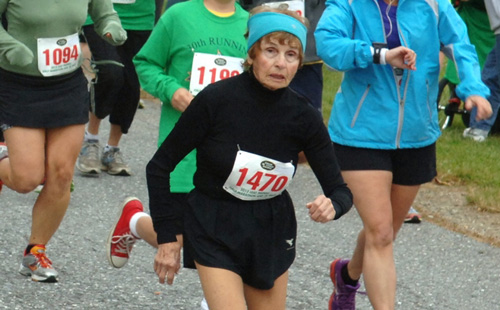
It’s a running fact of life: Runners get slower as they get older. But a new report suggests that strengthening the ankles and calves could help aging runners stave off the slowdown. (Runner’s World)

I like to keep things simple for my clients because they have busy lives, and adding a heavy physical training schedule to their to-list is not an effective way for them to maintain their physical fitness. This is why I am a BIG fan of incorporating jump rope sessions into all my clients’ training programs.

For runner’s especially, jump rope provides an opportunity to improve one’s aerobic endurance, coordination, balance and lower leg strength. Jumping rope is the ultimate full body work out. In 10 minutes, a jump rope session can torch 100 calories, more or less. So pick up your jump rope and get started today. If it’s been awhile since you’ve jumped rope, you probably won’t be able to jump continuously for 10 minutes; but don’t let that deter you. If you’ll keep at it, you’ll be able to add another minute or two to your hops and skips in short order.

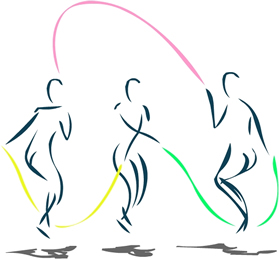
Consider the graphic below which illustrates the full body work out you gain while jumping rope. Without reserve, I can make this promise to you just like I do with my clients, if you’ll jump rope three or four times a week for 10 minutes at a time, I promise you that within 1 to 3 weeks, you’ll notice improved gains in your stamina, power, speed, and agility. So what are you waiting for? Hop to it and enjoy stronger lungs and legs!

jump_rope


Build Muscle Before, During and After Menopause

As a personal trainer specializing in the ‘Over the Hill’ demographic, I’m often asked by my clients what the best exercises are for women of mature years. I used to tell my clients that they should engage in so much aerobic, strength and flexibility training so as to realize continued fitness into their senior years. But I have noticed that most, if not many, of my clients struggle to be physically active regardless of what they know they should be doing.

So I have changed my answer to this often asked question by saying that the BEST exercises for EVERY WOMAN are the exercises WHICH SHE ENJOYS doingoften. For women on the precipice of menopause, a physically active lifestyle is highly protective against the traditional weight gains and muscle losses associated with the menopause years. If middle-aged women who still have regular menstrual cycles or are on hormone replacement therapy can discover or create ways to be physically active during these transitional years before menopause, they can set themselves up for less weight gain and muscle loss during the menopause season. From my personal experience, I would have  I have gained my best fitness outcomes (strength/endurance) from adding weight training and high intensity interval training to my exercise regimen. Unfortunately, many women my age shy away from these types of activities and view them as behaviors which only men or elite-athletes engage.

So this is why I standardize my response to that most asked question and resort to the standard conventions for exercise prescription. By this I mean that 2 to 3 days a week  should be devoted to strength training together with 3 to 5 days a week of aerobic exercise with a minimum 30 minute duration. Clearly, the key to staying this active is in discovering those activities which provide a measure of fun and enjoyment for you. Remember, if your exercise routine doesn’t put a smile on your face, then your exercise routine becomes a stress inducing activity rather than a health inducing activity.

Finally, don’t discount the value of trying something new when planning your  fitness program. You may even want to re-visit exercises or activities you learned to dislike in your youth.  When you have a say in how or when you engage in your exercise, you may discover that you could actually enjoy the rigors of team sports or group fitness compared  to the requisite ‘gym’ class you were forced to attend during your school years. And if you’re the type of person who enjoys a more social approach to your exercise, then by all means enlist your friends to join you in your fitness endeavors.

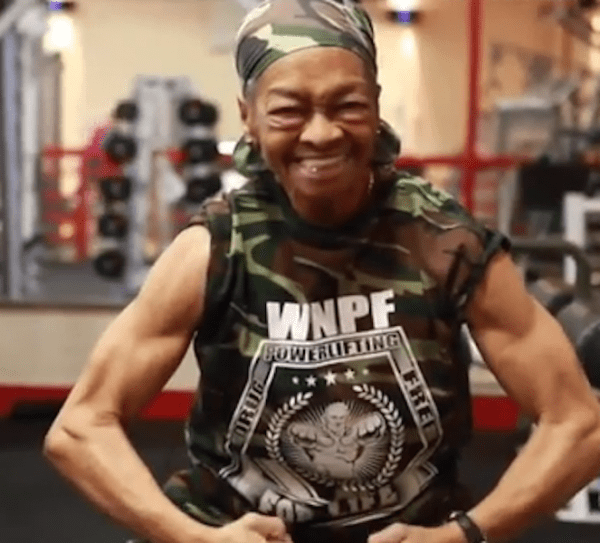
You  might like to read the brief article about Ms. Willie Murphy (pictured above), a 77 year old grandmother who took up weight training not too long ago. I think her story perfectly illustrates the fact that you are never too old to try something new and get fit too!


Tell Me a Story…For Brain Power

No matter our age, most everyone likes to hear or read a good story. Whether we read the story to someone or narrate as storyteller, these activities are powerful medicine for our brains because these behaviors activate neural pathways which might otherwise not get mobilized. Some might argue that reading to ourselves is just as effective as reading out loud to others, however, silent reading is similar to watching television in terms of the amount of mental energy utilized by the brain.

So remember, if you want to sharpen your intellectual edge and build some brainy muscle, then gather together a friend or two and tell or read them a story. You never know, but your doing so could spark creative inertia  among your group of listeners; your story telling might just be the catalyst which inspires another person to write and tell a story. Perhaps their story is just waiting for a reason to be told.


Wind and Rain

I had to kick my butt out the door this afternoon for today’s run. Not having a race on my calendar to train for really makes it easy to stay indoors, especially when the weather is threatening rain with gusty winds. It’s not that I haven’t run in the rain before or that I’m afraid of getting wet. I ran earlier this week on a morning that looked less rain-ful than today and I ended up getting hailed on before I finished the 4-mile out and back. Rain is one thing, hail is much more hurtful.

Thankfully, the rain held back for me this afternoon, and the temperature was perfect (50 degrees +/-) even with the gusting wind. Today’s run put 30 miles on my legs this week, and they felt a little weary and my breath too came in heaves because I was running at mile high elevation this afternoon. But all in all, I am glad I got over myself, and got out the door and moved myself down the trail and back.


Puzzle It…For Brain Power

Returning to the simple games of our childhood is yet another way we can enhance brain power as we progress in age through the decades. Improved language skills can be realized by doing crossword puzzles. Likewise, spatial awareness is advanced when you put together a jigsaw puzzle. If you already engage in puzzle activities, you can improve your mental powers by undertaking more challenging puzzles.

Not a puzzle person? Remember there is brain strengthening power for you when you engage in novel activities. So perhaps an easy word search or Sudoku puzzle will whet your appetite for further puzzling. If you enjoy using a computer, you can find word search and crossword puzzle applications for your computer or smart phone too. Don’t wait for a rainy day to have puzzle fun. Schedule regular puzzle breaks into your daily routine; think of puzzling as exercise for your brain. So be creative and puzzle it today to strengthen your most important muscle…for brain power!


Sharpen Your Senses…for Brain Power

You probably have to be around 50 years old or so (plus or minus a decade) before you actually begin to notice that some of your physical senses (sight, sound, taste, touch, smell) are not as keen as they used to be in the decades that have passed since your youth.

Whether the diminishing of our senses is from overuse, disuse or abuse, it really doesn’t matter; however, we do have some recourse when it comes to maintaining or improving our current sensory switchboard. If you have been reading the brainpower posts, then you already know that our brain is plastic, meaning, it is capable of learning new things, making new connections, and crisscrossing hemispheres to perform new or novel tasks. Yes, even in middle age, thank goodness, neural-plasticity is our friend, and we can help our brain stay healthy and dynamic when we perform old tasks in new ways.

So what follows are some ideas for you to use in the coming days. Perform these ‘exercises’ with some regularity to make your neural pathways strong and dependable.

For sight – Blinking frequently, palming, eye-tracking exercises

For hearing – turn the volume down and listen with intent; listen to different genres of music and try to  identify specific instruments being played

For taste – eating with the eyes closed and think about taste and texture; chew your food thoroughly to unlock more flavor molecules

For touch – Close eyes and attempt to sort coins by touch; give and receive body massage; with a friend, practice writing the letters of the alphabet using your finger as pencil on your friend’s arm, hand or back

For smell – every day smell deeply some specific item whether it be food, or flower, or fragrance; then use words to describe the scent. Performing these two activities regularly will help sprout new scent receptors.

Source


Keep Running…It May Save Your Life

I love to run…anyone who knows me knows that, but what I love almost as much as running are stories about runners who inspire…inspire me to keep going as I run through the decades of my life. Yesterday’s post on Runner’s World was just such a story. A story that took over half a century to unfold, but those many years were needed to make a strong point about the power of running to heal our bodies and minds; when we put our shoes on and show up to run, no matter how we feel (mentally or physically) we set off a chain reaction of health and healing for ourselves. Whether we are 30 years old or 80+ years old, running is excellent therapy. Read Sylvia’s story and be inspired today and know with certainty that the obstacles to your  well-being can be overcome with the help of God and your own two legs.  Now get out there and have a wonder-filled run!


Spell Me a Sign…for Brain Power

As you may or may not know, novelty is a key component in creating healthy brain architecture. This is the third post in the brainpower series and in today’s mind enlarging message I would like to give you another activity that will challenge and grow your brain’s neural network, specifically your visual and motor skill centers. You can enhance and wake up your brain’s neural connections by learning this new skill: sign language.

I had the opportunity to learn sign language some years ago when I was raising my infant grandchild. I wanted to be able to communicate with my grandson and have him be able to communicate with me long before he could speak words and sentences. He was not hearing impaired, but learning and teaching him sign language gave us a way to communicate before he was verbal. It was fun (and a bit challenging) to teach an infant to mimic hand signs to communicate about things and ideas like: eat, more, all-done, dirty, apple, dog, cat, bird, banana, etc. But even before his first birthday, my grandson and I could express rudimentary needs and ideas by using sign language.

For adults, learning sign language is like learning a foreign language, and unless an we have strong intrinsic motivation, most of us tend to lose interest quickly in the novelty of acquiring a secondary language. But I would like to challenge you to approach learning sign language as a health and well-being activity. Practice making the simple letter signs of the alphabet with your hand and fingers; then coordinate these letters to sign your name. This activity is a powerful, two-fold brain trainer. Using your hands and eyes at the same time to sign letters and memorizing these symbols and the order in which to use them requires muscle (motor), visual and memory skills to be employed simultaneously. This effective training activity is like a tonic for our brains. Not only will learning this skill recharge sluggish neural connections but when practiced faithfully, you will also make brand new neural connections (muscle memory). And that’s how you build a strong brain!

So go ahead, spell me a sign! A chart of the sign language alphabet is pictured below…give it a try and show someone you know your newly acquired brainpower from the palm of your hand!

signlanguageabc02


Organize and Rearrange…for Brain Power

In the previous ‘Brain power‘ post, I discussed the value of mixing up our exercise and activity routines to help our neural network make new connections. Practicing non-dominant activities helps our brain build redundancy into our brain circuitry. Such behaviors may in fact help ward off or reduce the effects of aging and disease. In today’s post I would like to consider the refreshing brain benefits of organizing and re-arranging our living spaces.

Brain researchers have known for some time that organized people perform better on memory tests. Getting organized helps build better memory. The old adage ‘A place for everything and everything in its place’ is built on this organization principle. But organization skills do not have to be exorbitant to be helpful. Spending five minutes organizing one’s desk or medicine cabinet can improve efficiency, memory and possibly reduce stress levels too.

A related activity, re-arrangement, also helps our brains strengthen spatial and visual connections. For instance, by re-arranging furniture in your living spaces on an occasional basis, the brain must re-map neural connections to assist us in navigating the new floor space and layout. Something as simple as moving a trash can from one location to another, requires our brains to re-map circuitry (memory and movement) as we must now navigate to a new location to throw away a piece of litter. Taking a different route home (on foot or in our vehicle) provides a similar benefit.

It doesn’t require much, except may a little creativity on our part, to change the scenery in which we reside and navigate. Kitchen cabinets, pantries, desks, counters and backyard walkways all provide ample opportunities for us to challenge and improve our brain’s neural pathways.

Remember, brainpower increases and improves when we build novelty into our regular activity patterns. When we do familiar things in unfamiliar ways we wake up nerve cells which in turn increases blood flow to make these new connections for our brain cells. A little change goes a long way.


Mix it Up…for Brain Power

As a personal trainer, I often advise my clients to mix up their exercise routines to keep their muscles and their mind challenged. Science has taught us that regular bouts of exercise produce adaptations in the neural connections between our brain and muscles. And we easily recognize these adaptations when we become stronger and have improved aerobic endurance. But even these improvements plateau if we do not mix things up in our activity routines every once in a while.

So how do we overcome plateaus? We overcome plateaus by disrupting our regular routines. Planned, purposeful disruption is strong medicine for creating healthy neural pathways. By adding something new to our exercise or movement routines, we create opportunities for our brains to adapt (reroute and rewrite neural pathways) when we integrate novel movement patterns into our daily activities.

For example, one thing I always suggest my clients do to improve their balance is to switch sides when engaging in routine daily activities. In other words, I encourage them to use their non-dominant hands or legs. If you are right hand dominant, try using your left hand once a day to brush your teeth, write your name or use your computer mouse. Likewise, notice which leg you tend to put into your pants first when you dress…then switch it up once in a while. Making these simple changes recruits and strengthens NEW neural connections.

If switching sides feels awkward or uncomfortable, that is normal, and the
reason we feel ‘off balance’ when we use our non-dominant limbs to do everyday activities is because we have, by years and years of preference, created a strong neural pathway (preference), and this preference is now COMFORTABLE. But from my perspective, comfortable equates to easy which equates to weakness which equates to imbalance; and imbalance is almost always a foundation not only for injury but also for illness. So remember, once in a while, a purposeful disruption needs to be introduced into your day. I hope you will have fun with this and choose to engage in some practical disruption soon. It’s good for your brain. It’s good for your body!


This is the first post in the brain power series. If you want to learn about more ways to improve your brain power, then follow my blog and have notification of my posts sent directly to your email.